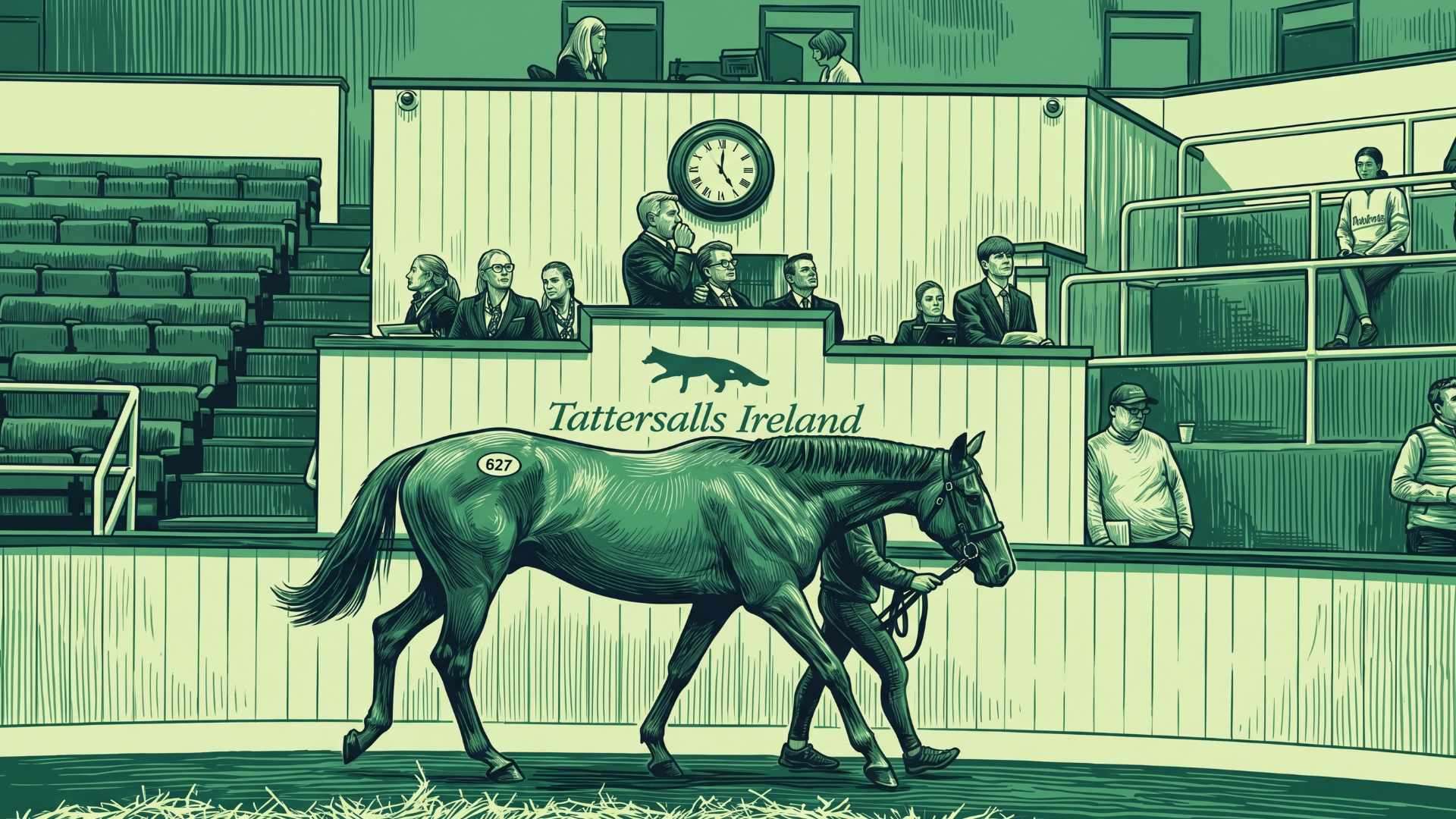

The 2026 Tattersalls Autumn Horses in Training Sale has ended with another huge week of business at Newmarket, as more than 33 million guineas changed hands and buyers from across the world competed for horses already in training.
A total of 1,018 horses were sold during the four-day sale, generating turnover of 33,199,500 guineas, with an average price of 32,612 guineas and a median of 15,000 guineas. The top price was 750,000 guineas.
It was the sixth consecutive year that turnover at the sale has passed 30 million guineas, underlining just how important the event has become for owners looking to buy proven horses rather than waiting for yearlings to develop.
Why the Autumn Sale Matters to Owners
The Tattersalls Autumn Horses in Training Sale is very different from the major yearling auctions held earlier in the season.
Instead of buying a young horse that may not race for months, or even until the following year, buyers are looking at horses that already have form on the board. Some have won races, others may have shown promise without yet reaching their full potential, and many are ready to run again almost immediately.
That makes the sale particularly interesting for racing syndicates.
A new ownership group can buy a horse in late October, move it to a new trainer and potentially have members watching it race during the winter. There is less waiting involved than with a yearling, although buyers generally have far more evidence available when deciding what they think a horse is worth.
The catalogue contained more than 1,500 lots, ranging from horses changing hands for relatively modest sums to established performers attracting bids well into six figures.

The Lost King Tops the Sale at 750,000 Guineas
The highest price of the week was paid for The Lost King, who sold for 750,000 guineas to Najd Stud and Archdale Bloodstock.
The Kingman gelding had already shown enough ability to attract major international attention and became the headline horse on the second day of the sale.
Tyrrhenian Thunder was another major sale, making 600,000 guineas, while several other horses reached six-figure sums.
The figures at the top end grab the headlines, but for racehorse owners and syndicate managers the middle and lower parts of the market can be just as interesting. Plenty of horses changed hands for £20,000, £30,000 or £50,000-equivalent sums, which are much more realistic prices around which a new shared ownership group can be built.
A Huge Result for Solario Racing
One of the most interesting ownership stories of the sale involved Victoire Magique, who sold for 450,000 guineas.
Trainer Amy Murphy originally bought the colt for just 40,000 guineas at the Tattersalls October Yearling Sale. He went on to win the Group 3 Prix Gerald de Geoffre at ParisLongchamp before being offered for sale on behalf of Solario Racing.
Murphy described the result as life-changing money for the syndicate.
That is an important part of racehorse syndicate ownership that can sometimes be overlooked.
Owners naturally hope their horse wins races and earns prize money, but the horse itself can also become far more valuable than the original purchase price. If the syndicate agreement allows members to share in the net sale proceeds, a successful auction can produce a significant return.
Of course, stories like Victoire Magique are exceptional rather than normal, and buyers should never join a syndicate expecting a horse to increase dramatically in value. But the sale shows why the terms covering a horse’s eventual sale matter just as much as the clauses covering prize money.
International Buyers Remain Important
The scale of overseas demand was another major feature of the week.
Tattersalls said buyers from more than 30 countries took part, with particularly strong interest from Australia, the Gulf states and across Europe. Australian buyers alone purchased more than 20 horses.
That international demand matters to British owners because it creates a strong resale market.
A useful Flat horse may be attractive to buyers in Australia, Hong Kong or the Middle East, while National Hunt prospects can attract interest from Britain, Ireland and France. Horses do not have to be Group winners to find a buyer.
Tattersalls also noted that horses bought from this sale have gone on to win more than 200 Group and Listed races around the world since 2022.
What Happens After the Sale?
For our readers, the most interesting stage may actually begin now.
Some of the horses bought during the week will disappear overseas, but others will remain in Britain and Ireland and could soon be offered through new syndicates, partnerships and racing clubs.
This is often where an autumn purchase turns into a winter ownership opportunity. A syndicator buys a horse for perhaps 20,000 or 40,000 guineas, adds training, insurance, management and other costs, and then divides the package into shares.
That means anyone looking for a horse that is already race-ready should keep an eye on syndicate websites over the coming weeks.
Another Strong Sale for Tattersalls
Turnover of more than 33 million guineas shows that the market for horses already in training remains extremely strong.
The biggest buyers may operate at a level far beyond the average racing fan, but the sale is still highly relevant to shared ownership. It creates fresh syndicate horses, gives existing owners a route to sell and provides another reminder that the value of a racehorse can change significantly during its career.
For anyone interested in joining a syndicate, the next few weeks could be particularly interesting as some of the horses bought at Newmarket begin appearing with new trainers and new ownership groups.